
Select a trading day to view all Scanner results, chart evidence, and market explanations.
3 Scanners Available
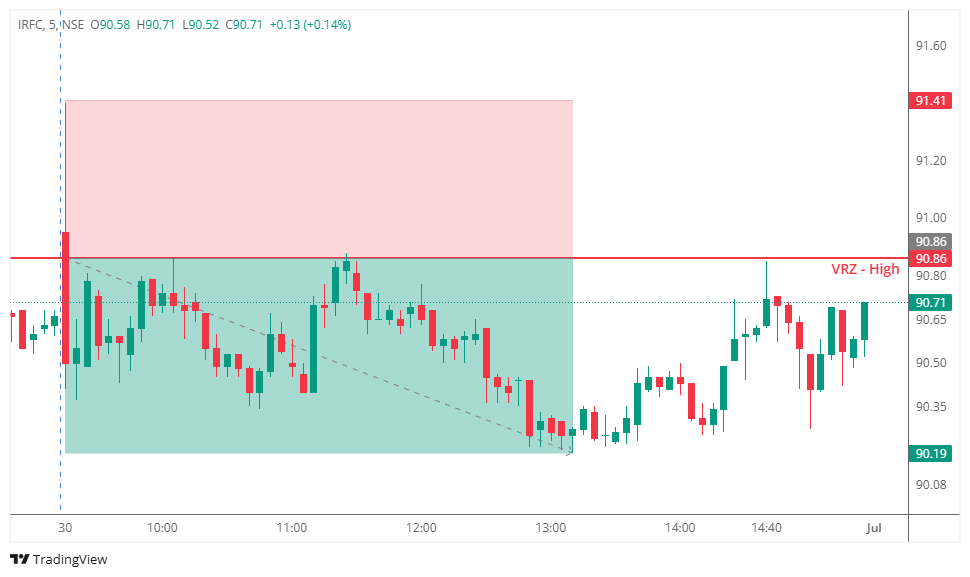
IRFC approached the previously identified VRZ High during the trading session and briefly traded above the resistance zone, creating the impression of a potential bullish breakout.
However, the breakout failed to attract sustained buying interest.
Within the next few candles, price slipped back below the VRZ High, confirming a classic Breakout Failure (BOF) setup. The inability of buyers to maintain acceptance above resistance trapped late breakout participants and shifted short-term momentum in favor of the sellers.
Following confirmation, IRFC witnessed a controlled downside move as selling pressure gradually increased. The bearish structure remained intact until the predefined target was achieved.
The setup delivered an approximate 0.74% move while offering a disciplined 1:1 Risk-Reward opportunity for intraday traders.
Many traders initially expected:
Instead, the market revealed weakness.
As price moved back below the VRZ High:
A breakout that cannot sustain above a key resistance level frequently results in trapped buyers exiting their positions, accelerating the reversal.
Rather than entering on the breakout itself, waiting for price to reclaim the VRZ High from below provided confirmation and reduced unnecessary risk.
Although the setup offered a modest 1:1 Risk-Reward, disciplined execution and proper position sizing ensured a structured and high-probability trade.
The rejection below the VRZ High confirmed that sellers had regained control, validating the bearish BOF setup.
This IRFC trade demonstrates that not every successful BOF needs an exceptionally high risk-reward ratio to be worthwhile. The market provided a clean confirmation after the failed breakout, allowing traders to participate in a controlled bearish move with clearly defined entry, stop-loss, and target levels.
By waiting for confirmation instead of anticipating the reversal, traders were able to align with market structure and execute the trade with confidence.

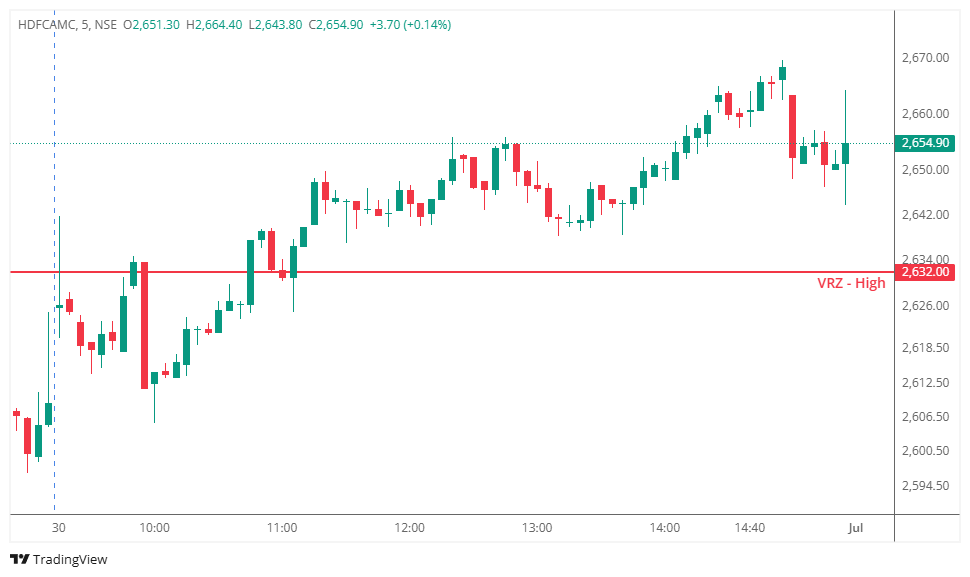
HDFCAMC approached the previously identified VRZ High at ₹2,632.00, where traders began monitoring for a potential bearish Breakout Failure (BOF). Since the level had acted as an important resistance zone, the expectation was that any breakout lacking buying commitment could reverse back below the VRZ and create a short-selling opportunity.
Initially, price traded around the resistance area, raising the possibility of a failed breakout. However, instead of showing aggressive rejection, the market quickly established acceptance above ₹2,632.00.
As the session progressed, buyers continued defending higher prices and steadily pushed the stock upward, creating a series of higher highs and higher lows. The expected bearish rejection never developed, preventing the BOF structure from completing.
Without confirmation through rejection and sustained trading back below the VRZ, the setup remained invalid and no Logical Trading System (LTS) BOF trade was triggered.
Many traders anticipated:
The market behaved differently.
Rather than trapping buyers, the market rewarded bullish participation and continued its upward trend.
A valid BOF requires price to reclaim the breakout level from above and move back below resistance. Since HDFCAMC remained above the VRZ, the bearish setup never qualified.
Once price accepted above ₹2,632.00, the former resistance effectively became support, reinforcing bullish market structure.
Markets frequently continue trending higher when breakout levels attract sustained buying instead of immediate selling.
Waiting for complete BOF confirmation prevents traders from entering low-probability reversal trades simply because price reaches a resistance level.
This session highlighted one of the most important rules of price action trading: a potential BOF is only an idea until confirmation appears.
Although HDFCAMC reached the predefined VRZ High and initially attracted attention for a possible bearish reversal, the market never produced the rejection required under the Logical Trading System (LTS). Instead, buyers maintained control, accepted higher prices, and continued the bullish move.
By waiting for confirmation rather than anticipating a reversal, disciplined traders avoided an unnecessary counter-trend trade and remained aligned with the market's actual direction.

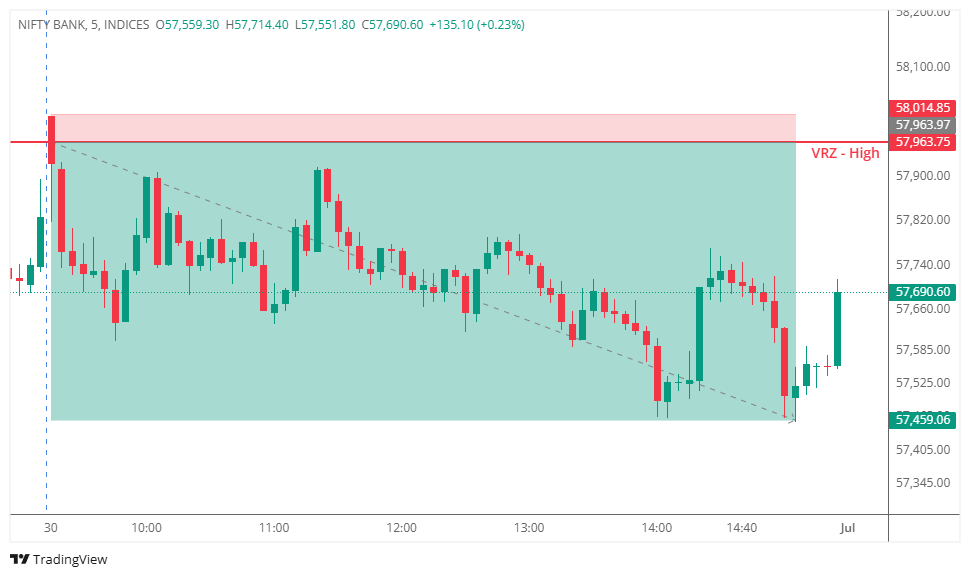
BANKNIFTY opened the session with strong bullish momentum and tested the previously marked VRZ High. Buyers briefly pushed above the resistance zone, creating the appearance of a genuine breakout.
However, the breakout lacked follow-through.
Within a few candles, price slipped back below the VRZ High, confirming that buyers were unable to sustain acceptance above resistance. This failed breakout triggered a classic Breakout Failure (BOF) setup, trapping late breakout buyers and shifting momentum toward the sellers.
Once the rejection was confirmed, BANKNIFTY gradually declined throughout the session, respecting the bearish structure and delivering a clean downside move.
The trade achieved approximately 0.87% from entry to target while offering an outstanding 1:10 Risk-Reward opportunity.
Many traders initially believed:
The market revealed a different story.
After reclaiming the VRZ:
When price fails to hold above an important resistance zone, trapped buyers frequently accelerate the downside move.
The short trade became valid only after price accepted back below the VRZ High. Waiting for confirmation significantly improved trade quality.
Because the invalidation level remained close to the VRZ High, the setup offered limited downside risk while allowing a much larger profit target.
Instead of chasing the initial breakout, waiting for the BOF confirmation aligned the trade with institutional order flow and produced a cleaner, higher-probability setup.
This BANKNIFTY session perfectly demonstrated why Breakout Failure (BOF) remains one of the highest-quality price action strategies. The initial breakout attracted aggressive buyers, but the inability to sustain above the VRZ High quickly shifted market control to the sellers.
Rather than forcing an early entry, disciplined traders waited for confirmation below the resistance zone, allowing them to participate in a controlled bearish move with minimal risk and exceptional reward.
The result was a textbook BOF execution that respected structure from entry to target.
