
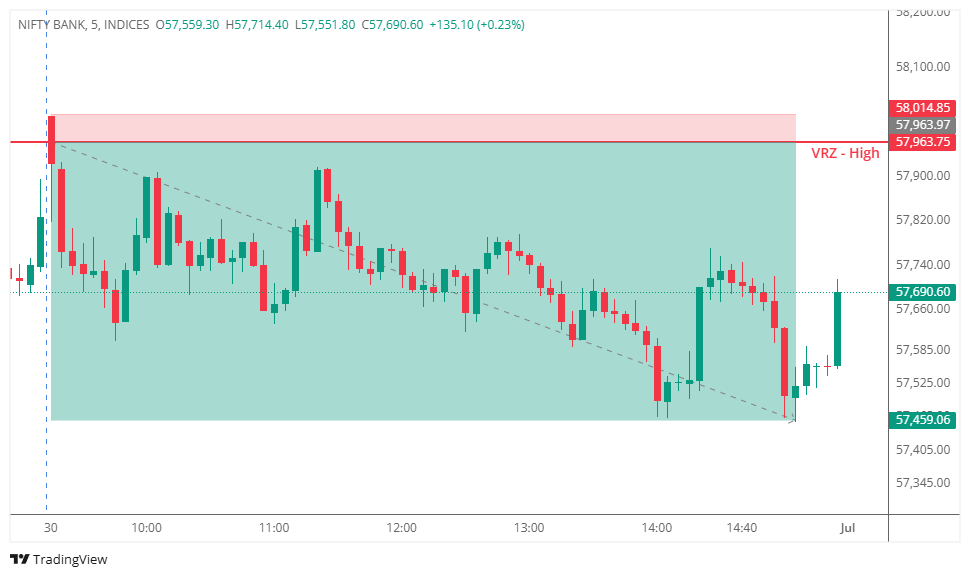
BANKNIFTY opened the session with strong bullish momentum and tested the previously marked VRZ High. Buyers briefly pushed above the resistance zone, creating the appearance of a genuine breakout.
However, the breakout lacked follow-through.
Within a few candles, price slipped back below the VRZ High, confirming that buyers were unable to sustain acceptance above resistance. This failed breakout triggered a classic Breakout Failure (BOF) setup, trapping late breakout buyers and shifting momentum toward the sellers.
Once the rejection was confirmed, BANKNIFTY gradually declined throughout the session, respecting the bearish structure and delivering a clean downside move.
The trade achieved approximately 0.87% from entry to target while offering an outstanding 1:10 Risk-Reward opportunity.
Many traders initially believed:
The market revealed a different story.
After reclaiming the VRZ:
When price fails to hold above an important resistance zone, trapped buyers frequently accelerate the downside move.
The short trade became valid only after price accepted back below the VRZ High. Waiting for confirmation significantly improved trade quality.
Because the invalidation level remained close to the VRZ High, the setup offered limited downside risk while allowing a much larger profit target.
Instead of chasing the initial breakout, waiting for the BOF confirmation aligned the trade with institutional order flow and produced a cleaner, higher-probability setup.
This BANKNIFTY session perfectly demonstrated why Breakout Failure (BOF) remains one of the highest-quality price action strategies. The initial breakout attracted aggressive buyers, but the inability to sustain above the VRZ High quickly shifted market control to the sellers.
Rather than forcing an early entry, disciplined traders waited for confirmation below the resistance zone, allowing them to participate in a controlled bearish move with minimal risk and exceptional reward.
The result was a textbook BOF execution that respected structure from entry to target.