
Select a trading day to view all Scanner results, chart evidence, and market explanations.
5 Scanners Available
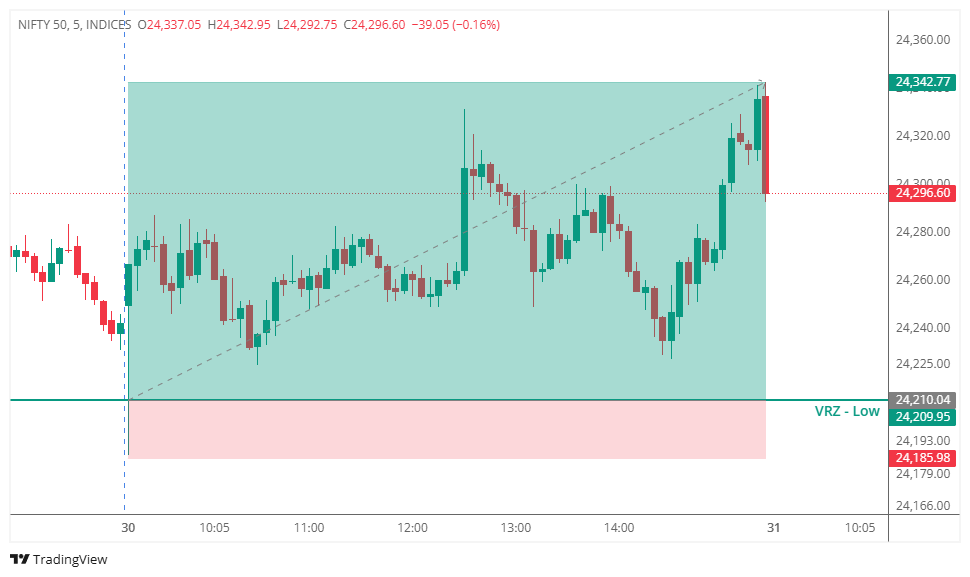

🔹 NIFTY 50 tested the VRZ Low, with sellers attempting to break below the key support level.
⚠️ The breakdown failed to sustain as price quickly reclaimed the VRZ Low, signaling weakening bearish momentum.
🔺 This rejection confirmed the Breakdown Failure (BOF) setup and created a strong bullish intraday opportunity.
📈 Buyers regained momentum after the failed breakdown and steadily pushed the index higher.
🟢 Price continued trading above the VRZ Low, confirming sustained bullish strength throughout the session.
🎯 The confirmed BOF setup delivered a 0.55% bullish move with an impressive 1:5 Risk-Reward.
🟢 Buyers: Defended the VRZ Low and successfully reclaimed market control.
🟡 Breakdown Traders: Were trapped when price moved back above the support zone.
🔴 Sellers: Lost momentum after failing to sustain the breakdown, allowing buyers to dominate the session.
1️⃣ Failed Breakdowns Can Lead to Strong Recoveries
A breakdown that cannot hold below support often signals a bullish reversal.
2️⃣ Confirmation Improves Trade Quality
Waiting for price to reclaim the VRZ Low helped validate the BOF setup before entering.
3️⃣ Trade with Structured Risk
Using the VRZ Low as the invalidation level supported disciplined trade execution and improved confidence.
4️⃣ Follow Confirmed Price Action
Trading after confirmation helped align the position with the market's actual direction rather than anticipating a reversal.
🔸 The setup became actionable after price reclaimed the VRZ Low and confirmed the failed breakdown.
📈 Buyers maintained control, driving a steady bullish move throughout the session.
⚖️ Disciplined execution around the VRZ level helped capture the move while maintaining controlled risk.
🏆 The trade delivered a 0.55% bullish move with an excellent 1:5 Risk-Reward.
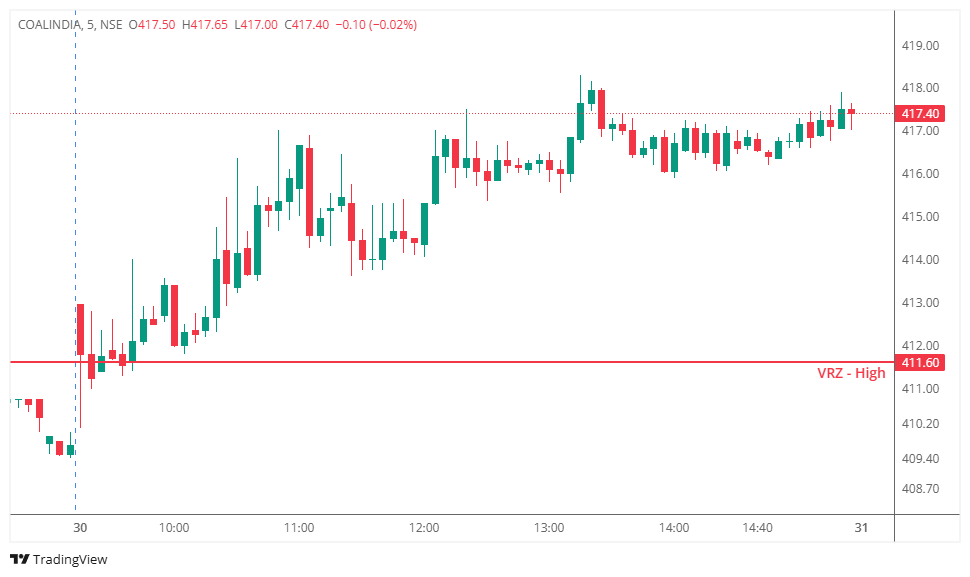

COALINDIA recovered toward the VRZ High (₹411.60) after an early weak opening, where sellers were expected to defend the resistance.
Price briefly moved above the VRZ High before slipping back below it, creating a valid Breakout Failure (BOF) short setup under the Logical Trading System (LTS).
The BOF short trade was triggered after the initial rejection near the VRZ High.
However, sellers failed to build momentum. Buyers quickly absorbed the selling pressure, reclaimed the breakout level, and continued forming higher highs and higher lows.
As bullish momentum strengthened, the BOF setup was invalidated and the predefined stop loss was triggered.
The setup failed because sellers were unable to maintain control after entry.
Key warning signs:
❌ Price quickly reclaimed the VRZ High.
❌ Bearish momentum faded.
❌ Buyers continued forming higher highs and higher lows.
❌ The resistance zone turned into support.
These signals confirmed that the bearish reversal lacked strength.
The chart shows a classic BOF failure followed by bullish continuation.
🔹 Buyers broke above resistance.
🔸 Sellers attempted a reversal.
🔺 The rejection lacked confirmation.
🔷 Buyers reclaimed the breakout level.
⭐ Bullish momentum continued, validating the breakout.
This type of move often traps early short sellers before the trend resumes higher.
⚠️ Every BOF setup has a probability of failure.
📉 A stop loss reflects changing market conditions—not poor execution.
🏦 Strong buying can invalidate even high-probability reversal setups.
🛡️ Consistent risk management is the foundation of long-term trading success.
This trade followed all Logical Trading System (LTS) rules and remained a valid execution despite the loss.
Professional traders focus on:
✅ Following high-probability setups.
✅ Respecting stop losses.
✅ Protecting trading capital.
✅ Staying disciplined and emotionally neutral.
Successful trading is built on protecting capital.
✅ Entry followed the trading plan.
✅ Risk was predefined.
✅ Stop loss was respected.
✅ Capital remained protected for future opportunities.
Small, controlled losses are part of long-term profitability.

🌍 Markets constantly test patience, discipline, and risk management.
⚠️ This COALINDIA BOF Failure shows that an initial rejection alone is not enough—strong bearish confirmation is essential.
🛡️ Professional traders don't avoid losses; they control them through disciplined execution.
📈 Long-term success comes from consistently following a proven trading process while keeping losses small and controlled.
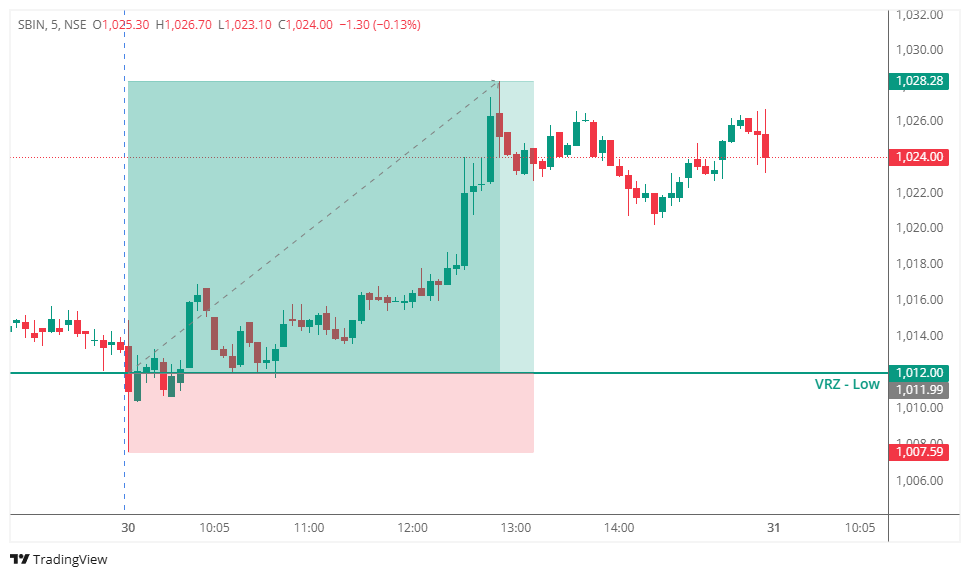

🔹 SBIN tested the VRZ Low, where sellers attempted to break below the key support.
⚠️ The breakdown failed to sustain as price quickly reclaimed the VRZ Low.
🔺 This rejection confirmed the Breakdown Failure (BOF) setup and created a bullish intraday opportunity.
📈 Buyers regained momentum after the failed breakdown and pushed price steadily higher.
🎯 The confirmed BOF setup delivered a 1.61% bullish move with a 1:3 Risk-Reward.
🟢 Buyers: Successfully defended the VRZ Low and regained control.
🟡 Breakdown Traders: Were trapped as price moved back above support.
🔴 Sellers: Lost momentum after the failed breakdown.
🔸 Wait for Confirmation: A reclaim of the VRZ Low confirmed the BOF setup.
🔹 Trade with Defined Risk: The VRZ Low served as a clear invalidation level for disciplined execution.
🔸 The trade became actionable after price reclaimed the VRZ Low.
📈 Buyers maintained control, resulting in a 1.61% bullish move with a solid 1:3 RR.
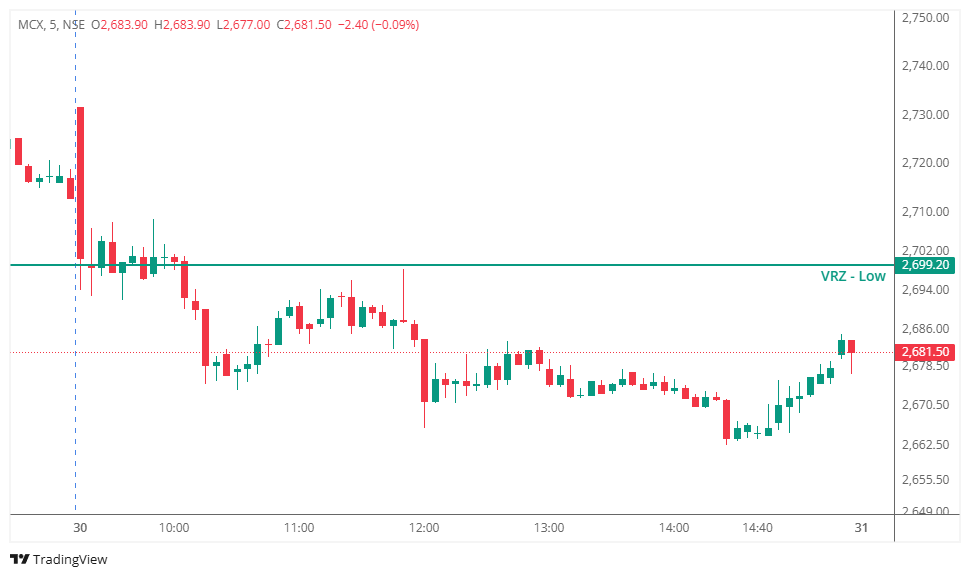

MCX opened with bearish momentum and gradually approached the VRZ Low, a critical support level where buyers were expected to defend the price.
As the stock briefly traded below the ₹2,699.20 VRZ Low and then moved back above the level, the price action created a potential Breakout Failure (BOF) buying opportunity. The quick recovery above support suggested that sellers were losing control, making it a valid BOF long setup according to the Logical Trading System (LTS).
Price initially broke below the VRZ Low, attracting fresh short sellers and triggering panic selling.
Shortly afterward, buyers stepped in and pushed the price back above the support zone, activating the BOF buy setup.
However, the expected bullish continuation never developed.
Instead, buying momentum remained weak, and the stock struggled to sustain higher prices. The recovery lacked follow-through, allowing sellers to regain control of the market.
Price eventually slipped back below the entry structure, triggering the predefined stop loss and invalidating the BOF long setup.
Although the stock attempted a late-session recovery, the stop loss had already been triggered, emphasizing the importance of respecting predefined risk levels.
The BOF long setup failed because buyers were unable to establish sustained momentum after reclaiming the support zone.
Key warning signs included:
❌ Bullish momentum weakened immediately after entry.
❌ Buyers failed to create higher highs.
❌ Selling pressure returned quickly.
❌ The recovery above the VRZ Low lacked strong confirmation.
❌ Market sentiment remained dominated by sellers.
These signals reduced the probability of a successful bullish reversal and ultimately led to the stop loss being hit.
The chart demonstrates a failed BOF long setup where the anticipated bullish reversal lacked confirmation.
🔹 Sellers initially pushed price below the support zone.
🔸 Buyers attempted to reclaim the VRZ Low.
🔺 The recovery failed to generate sustained bullish momentum.
🔷 Sellers regained control before the trend could reverse.
⭐ The BOF long setup was invalidated as bearish pressure returned.
This type of price action is commonly seen when institutional selling outweighs early buying attempts, trapping aggressive long positions before the market resumes its dominant direction.
⚠️ Every BOF setup carries a probability of failure, regardless of how strong the initial signal appears.
📉 A stop loss does not mean the trade was poorly executed—it simply reflects changing market conditions.
🏦 Professional traders understand that weak follow-through after a BOF entry is an early warning sign that the setup may fail.
🛡️ Strictly following predefined entry, stop loss, and risk management rules protects trading capital over the long term.
🎯 Consistency is built by executing the strategy correctly—not by expecting every trade to be profitable.
This trade followed all the rules of the Logical Trading System (LTS) and therefore remained a valid execution despite the loss.
Professional traders focus on:
✅ Following high-probability setups.
✅ Respecting stop losses without hesitation.
✅ Protecting capital through disciplined execution.
✅ Remaining emotionally neutral after every outcome.
One controlled loss never defines a trading strategy—consistent execution over hundreds of trades does.
Professional trading is built on protecting capital first and generating profits second.
In this trade:
✅ Entry followed the trading plan.
✅ Risk was predefined before execution.
✅ Stop loss was respected.
✅ No emotional averaging or revenge trading occurred.
✅ Capital remained protected for the next opportunity.
Small, controlled losses are an essential part of long-term trading success.
🌍 Financial markets constantly challenge a trader's patience, discipline, and ability to manage risk effectively.
⚠️ This MCX BOF Failure reminds us that a temporary recovery above a key support level does not always confirm a successful reversal. Strong follow-through is essential before expecting trend continuation.
🛡️ Successful traders don't strive to avoid losses—they focus on limiting risk through disciplined execution, predefined stop losses, and consistent decision-making.
📈 Sustainable profitability is achieved by following a proven trading system where disciplined winners consistently outweigh small, controlled losses over a large number of trades.
💪 Stay focused, respect your trading plan, and let discipline, patience, and consistency—not emotions—be the foundation of your long-term trading success.
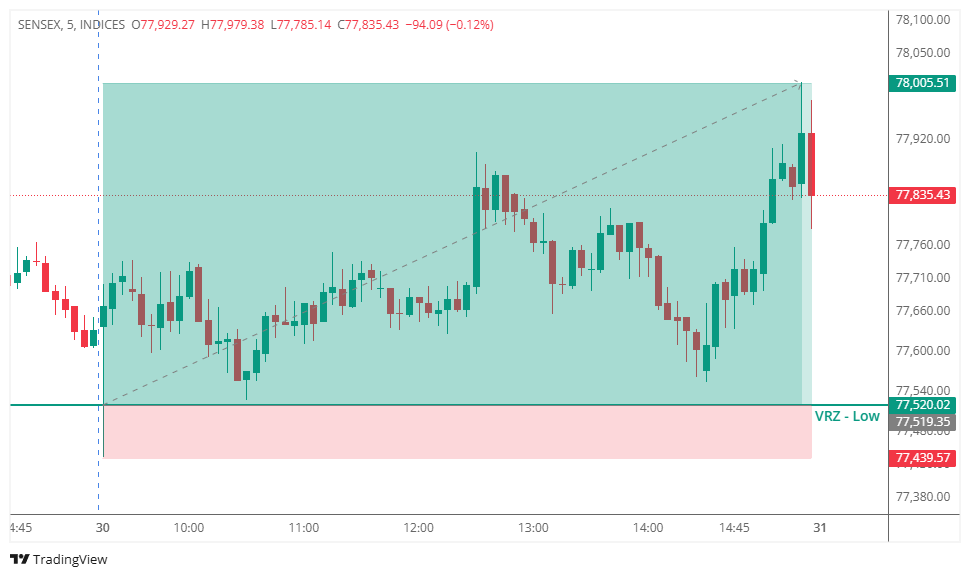

🔹 SENSEX tested the VRZ Low, with sellers attempting to break below the key support zone.
⚠️ However, the breakdown failed to sustain, and price quickly reclaimed the VRZ Low.
🔺 This rejection confirmed the Breakdown Failure (BOF) setup and created a strong bullish intraday opportunity.
📈 After reclaiming the VRZ Low, buyers gradually gained momentum and pushed the index higher.
🟢 Bullish strength increased throughout the session as sellers lost control.
🎯 The confirmed BOF setup delivered a 0.63% bullish move with an impressive 1:6 Risk-Reward.
🟢 Buyers: Defended the VRZ Low and regained market control.
🟡 Breakdown Traders: Were trapped when price moved back above the support zone.
🔴 Sellers: Failed to sustain the breakdown, allowing bullish momentum to build.
🎭 The initial breakdown created bearish expectations among traders.
📈 Once price reclaimed the VRZ Low, buyer confidence strengthened while trapped sellers covered their positions.
🚀 The shift in sentiment fueled a sustained bullish recovery.
🔸 1️⃣ Failed Breakdowns Can Trigger Strong Recoveries
A breakdown that cannot sustain below support often signals a bullish reversal.
🔹 2️⃣ Wait for Confirmation
Allowing price to reclaim the VRZ Low helped validate the BOF setup.
🟢 3️⃣ Trade with Defined Risk
Using the VRZ level as an invalidation point supported disciplined trade management.
🔸 The setup became actionable after price reclaimed the VRZ Low and confirmed the failed breakdown.
📈 Buyers steadily pushed the index higher as bullish momentum strengthened.
🏆 The trade achieved a 0.63% bullish move with an excellent 1:6 Risk-Reward.