
Select a trading day to view all Scanner results, chart evidence, and market explanations.
3 Scanners Available
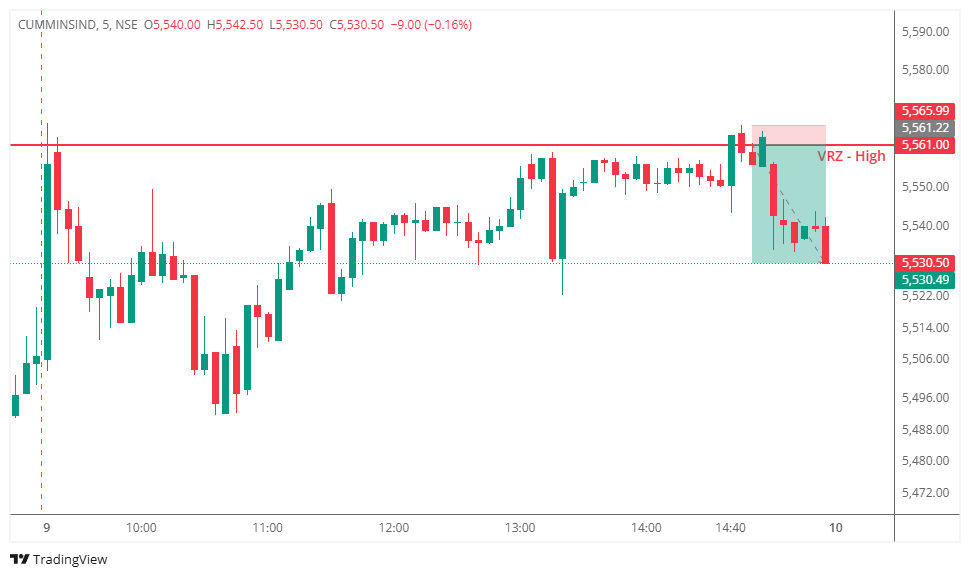
📍 CUMMINSIND approached the previously identified VRZ High during the latter half of the session and briefly traded above the resistance zone, signaling a potential bullish breakout.
⚠️ However, the breakout failed to attract sustained buying interest.
📉 Instead of holding above the VRZ High, price quickly slipped back below the resistance level, confirming a classic Breakout Failure (BOF) setup. This rejection trapped aggressive breakout buyers and shifted short-term market control to the sellers.
📊 Following confirmation, selling pressure strengthened as the bearish structure remained intact. Price moved steadily toward the predefined target, producing a clean intraday reversal.
🎯 The setup delivered a 0.55% move while achieving an excellent 1:6 Risk-Reward, reinforcing the value of disciplined, confirmation-based BOF trading.
Many traders initially expected:
🔹 The breakout above the VRZ High would sustain and extend the rally.
🔹 Buyers would secure acceptance above the resistance zone.
🔹 Strong bullish momentum would carry the stock to fresh intraday highs.
📌 The market told a different story.
Once price slipped back below the VRZ High:
🔸 Breakout buyers found themselves trapped.
🔸 Selling momentum gathered strength.
🔸 Bulls failed to recover the resistance level.
🔸 Sellers seized control of the short-term trend.
🔸 The failed breakout unfolded into a classic BOF reversal.
📍Failed Breakouts Often Signal Reversals
When price fails to hold above a key resistance level, trapped buyers frequently add to the selling pressure by exiting their positions.
✅ Confirmation Filters False Signals
The short setup became valid only after price moved back below the VRZ High, improving trade quality and reducing the risk of false breakouts.
🛡️ Defined Risk Supports Better Execution
Using the VRZ High as the invalidation point provided a clear stop-loss, enabling disciplined execution with an excellent 1:6 Risk-Reward.
📈 Trust Confirmed Price Action
Successful BOF trades come from following confirmed market structure rather than predicting reversals, helping traders stay aligned with momentum.
📊 This CUMMINSIND session highlighted why Breakout Failure (BOF) remains a reliable intraday price action strategy.
⭐ Although the initial breakout attracted bullish participation, the inability to sustain above the VRZ High quickly shifted momentum in favor of the sellers.
🚀 Traders who patiently waited for confirmation avoided the false breakout and participated in a high-probability bearish reversal with clearly defined risk.
📉 The bearish structure remained intact from entry to target, reinforcing the importance of patience, confirmation, and disciplined execution.

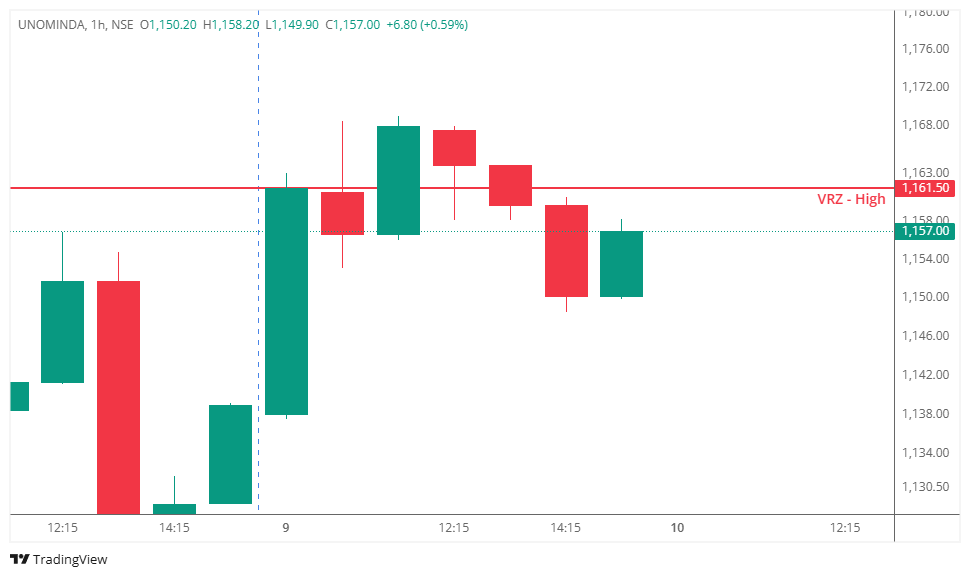
UNOMINDA approached the Daily VRZ High at ₹1,161.50 and briefly traded above the resistance, suggesting a potential bullish breakout.
✅ Buyers attempted to sustain prices above the VRZ High.
📉 However, the breakout lacked strong follow-through, and the price slipped back below the resistance, confirming a Bearish Breakout Failure (BOF).
This provided a valid short-selling opportunity based on the BOF setup.
The BOF setup triggered correctly, but the market first moved higher and hit the predefined Stop Loss, resulting in a losing trade.
❌ Stop Loss was triggered before the expected bearish move developed.
📉 Interestingly, after taking out the stop, the stock reversed and declined in the anticipated direction.
This is a classic example of a technically valid setup failing due to short-term volatility and liquidity-driven stop hunting.
What were traders expecting?
❓ Was the breakout above the Daily VRZ High strong enough to continue the uptrend?
❓ Would the failed breakout immediately attract aggressive sellers?
❓ Could the BOF deliver a smooth bearish move without any retracement?
What actually happened?
⚠️ The BOF was valid, but the market first moved higher and triggered the stop loss.
📉 After taking out nearby liquidity, the stock reversed and declined in the expected bearish direction.
💡 Lesson: Markets don't always move directly toward the target. Short-term volatility and stop hunts can occur before the anticipated trend unfolds.
✅ A correct market bias does not always guarantee a profitable trade.
✅ Stop-loss placement is just as important as trade direction.
✅ Short-term volatility can invalidate an otherwise strong setup.
✅ Every trading strategy experiences losing trades—risk management remains the key to long-term consistency.
💡 LTS Principle: Focus on executing confirmed BOF setups with disciplined risk management. Accept that some trades will hit the stop loss even if the market eventually moves in the expected direction. Consistency comes from following the process, not predicting every outcome.

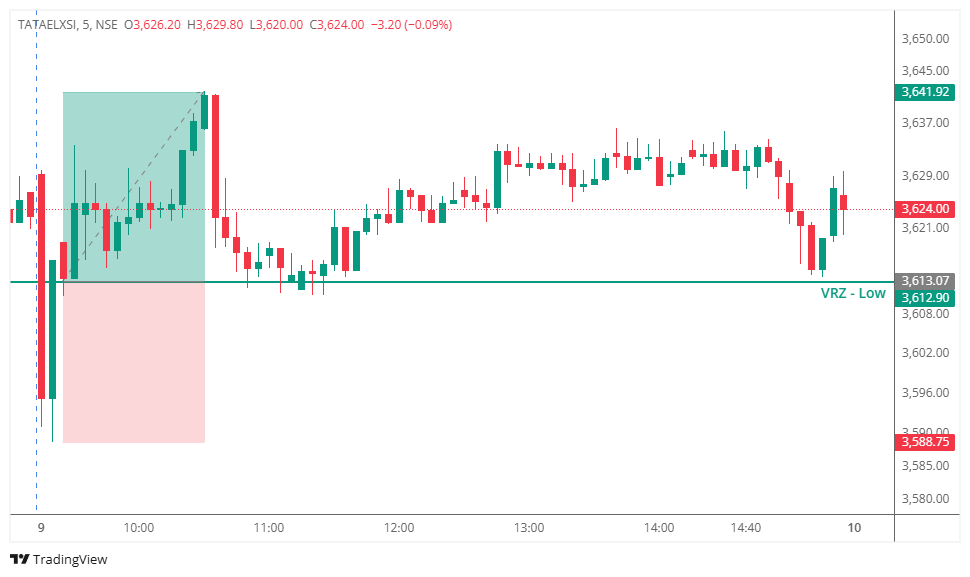
📍 TATAELXSI approached the previously identified VRZ Low during the opening session and briefly traded below the support zone, signaling a potential bearish breakdown.
⚠️ However, the breakdown lacked follow-through as sellers failed to maintain control beneath the support.
📈 Instead of continuing lower, price quickly reclaimed the VRZ Low, confirming a classic Breakout Failure (BOF) setup. This recovery trapped aggressive breakdown sellers and shifted short-term momentum back in favor of the buyers.
💹 Following confirmation, buying pressure strengthened steadily as the stock respected the bullish structure throughout the session. Price advanced toward the predefined target, producing a clean intraday reversal.
🎯 The setup delivered a 0.80% move while achieving a disciplined 1:1 Risk-Reward, highlighting the importance of waiting for BOF confirmation before entering a trade.
Many traders initially expected:
➡️ The breakdown below the VRZ Low would extend lower.
➡️ Sellers would maintain control beneath the support zone.
➡️ Bearish momentum would push the stock to fresh intraday lows.
The market had different plans.
After price reclaimed the VRZ Low:
➡️ Breakdown sellers became trapped.
➡️ Buying pressure steadily increased.
➡️ Bears failed to regain control below support.
➡️ Buyers dominated the short-term trend.
➡️ The failed breakdown evolved into a textbook BOF bullish reversal.
When price fails to sustain below a major support level, trapped sellers often fuel the upside move as they exit their positions.
The long trade became valid only after price reclaimed the VRZ Low, helping traders avoid false breakdown signals.
Using the VRZ Low as the invalidation level provided a logical stop-loss, allowing traders to execute the trade with disciplined risk management and achieve a 1:1 Risk-Reward.
Rather than predicting a reversal, traders who waited for BOF confirmation aligned themselves with the actual shift in market structure.
📊 This TATAELXSI session highlighted why Breakout Failure (BOF) remains an effective price action strategy for intraday trading.
⭐ Although the initial breakdown attracted bearish participation, the inability to sustain below the VRZ Low quickly shifted momentum back to the buyers.
🚀 Traders who waited patiently for confirmation avoided the false breakdown and participated in a high-probability bullish reversal with clearly defined risk.
📈 The bullish structure remained intact from entry to target, reinforcing the value of patience, confirmation, and disciplined execution.
