
Select a trading day to view all Scanner results, chart evidence, and market explanations.
3 Scanners Available
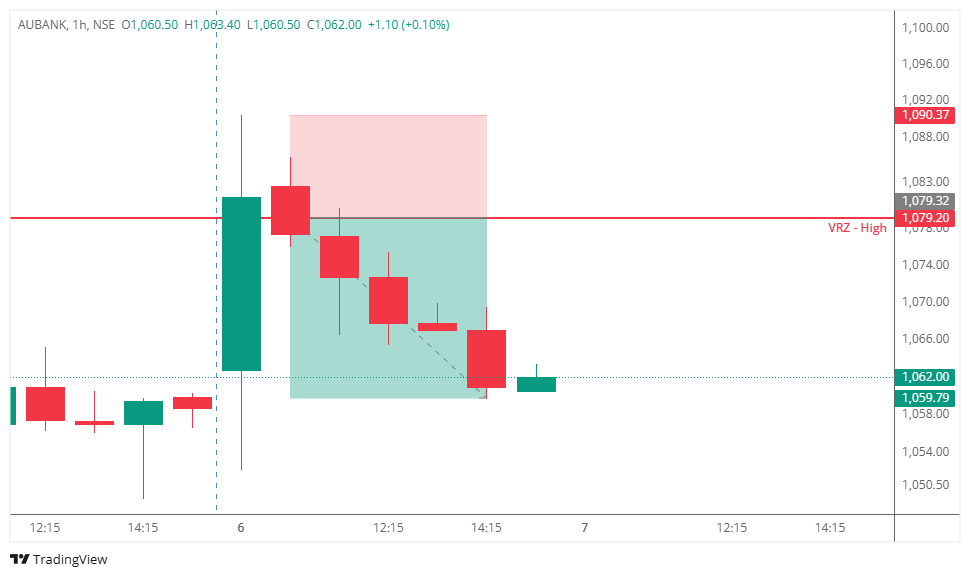
📈 AUBANK approached the VRZ High at ₹1,079.20 and briefly traded above the resistance level, creating the impression of a bullish breakout.
🎯 The breakout attracted fresh buyers expecting continued upside, while existing short sellers became cautious.
🔄 However, the breakout failed to sustain. Price quickly slipped back below the VRZ High, confirming a classic Breakout Failure (BOF).
📉 As the failed breakout became evident, trapped buyers started exiting their positions while fresh sellers entered the market.
🚀 This shift in momentum resulted in a 1.81% downside move, delivering a clean 1:1 Risk-Reward opportunity for disciplined traders.
Many traders believed:
❌ The breakout above resistance was genuine.
❌ Buyers would continue pushing prices higher.
❌ A fresh bullish trend had begun.
The market responded differently:
✅ Price quickly moved back below ₹1,079.20.
✅ Breakout buyers became trapped.
✅ Sellers regained control near resistance.
✅ Bearish momentum strengthened as long positions were unwound.
🎯 This transition from bullish optimism to bearish control fueled the successful downside move.
✅ Acceptance Above Resistance Determines a True Breakout
A breakout is valid only when price sustains above the VRZ.
📍 Failure to Hold the VRZ Signals Weakness
The inability to maintain higher prices revealed a lack of buying conviction.
⚠️ Failed Breakouts Often Create Strong Reversals
Trapped buyers and fresh sellers frequently combine to generate sharp downside moves.
🛡️ Confirmation Improves Trade Quality
Waiting for price to reclaim below the VRZ provided a higher-probability short setup with defined risk.
🎯 Discipline Wins Over Emotion
Trading the confirmation rather than chasing the breakout increased the probability of success.

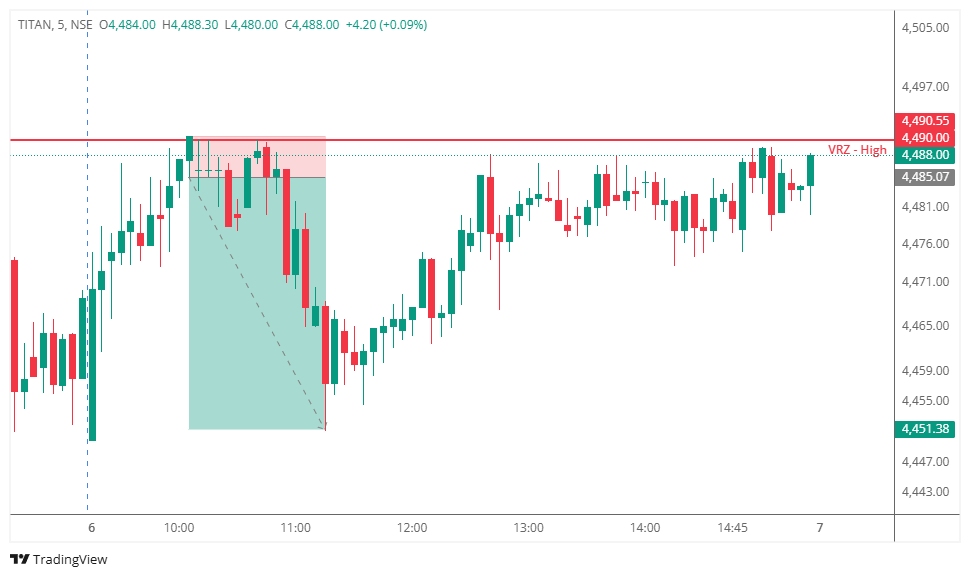
🚩 TITAN approached the previously marked VRZ High during the morning session and briefly traded above the resistance level, suggesting the possibility of a bullish breakout.
🚨 The breakout, however, failed to gain follow-through as buying interest quickly faded.
📉 Price soon slipped back below the VRZ High, confirming a classic Breakout Failure (BOF) setup. This rejection trapped breakout buyers and handed short-term control back to the sellers.
📊 As the session progressed, bearish momentum strengthened and the stock continued respecting the BOF structure until it reached the predefined downside target.
🏅 The trade delivered a 0.75% intraday move while achieving an excellent 1:6 Risk-Reward, highlighting the value of confirmation-based BOF trading.
Many traders initially believed:
➡️ The breakout above the VRZ High would remain intact.
➡️ Buyers would convert resistance into support.
➡️ Strong bullish momentum would continue throughout the session.
The market responded differently.
After the rejection below the VRZ High:
➡️ Breakout buyers became trapped.
➡️ Sellers steadily increased their pressure.
➡️ Bulls failed to reclaim the resistance zone.
➡️ Bears established control over the intraday trend.
➡️ The failed breakout transformed into a high-quality BOF reversal.
A breakout that cannot sustain above resistance frequently leads to trapped buyers exiting positions, strengthening the bearish move.
The trade became valid only after price accepted back below the VRZ High, reducing the probability of false entries.
A clearly identified invalidation level at the VRZ High enabled disciplined risk management while capturing an attractive 1:6 Risk-Reward.
Allowing price action to confirm the reversal helped traders align with the prevailing market structure instead of relying on assumptions.
💼 This TITAN session reinforced why Breakout Failure (BOF) is one of the most dependable intraday price action strategies.
📈 Although the initial breakout encouraged bullish participation, the inability to sustain above the VRZ High quickly shifted momentum toward the sellers.
✅ Traders who patiently waited for confirmation entered a structured, high-probability setup with clearly defined risk and reward.
📉 The bearish trend unfolded smoothly from entry to target, emphasizing the importance of patience, confirmation, and disciplined execution.

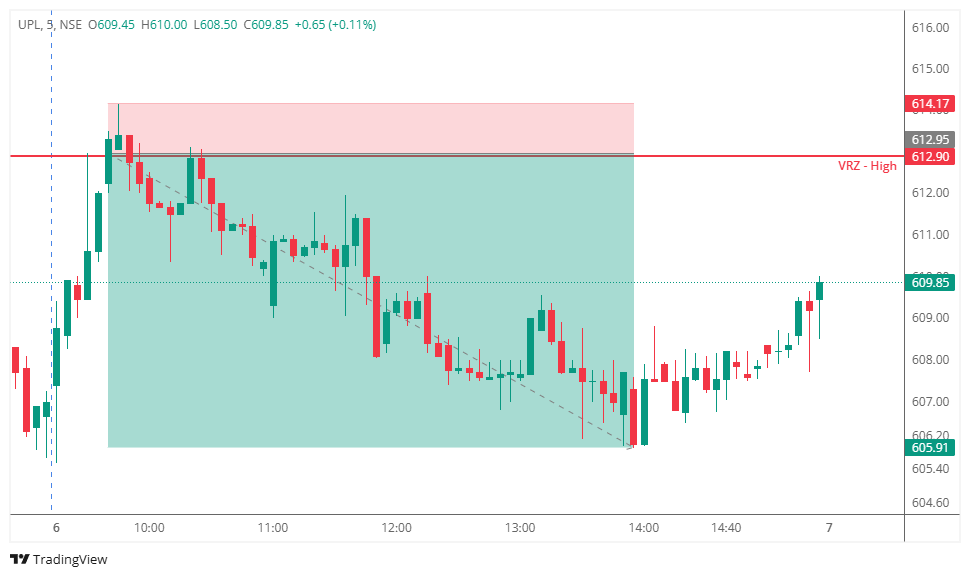
📍 UPL approached the previously identified VRZ High during the opening phase of the session and briefly traded above the resistance zone, signaling a potential bullish breakout.
⚠️ However, the breakout failed to attract sustained buying interest.
📉 Instead of holding above the VRZ High, price quickly slipped back below the resistance level, confirming a classic Breakout Failure (BOF) setup. This rejection trapped aggressive breakout buyers and shifted short-term market control in favor of the sellers.
🔻 Following confirmation, selling pressure gradually intensified as the stock respected the bearish structure throughout the session. The decline continued toward the predefined target, producing a clean intraday reversal.
🎯 The setup delivered an impressive 1.15% move while achieving an excellent 1:5 Risk-Reward, demonstrating the strength of disciplined BOF execution and confirmation-based trading.
Many traders initially expected:
➡️ The breakout above the VRZ High would continue higher.
➡️ Buyers would establish acceptance above the resistance zone.
➡️ Fresh bullish momentum would push the stock to new intraday highs.
The market had different intentions.
After price slipped back below the VRZ High:
➡️ Breakout buyers became trapped.
➡️ Selling pressure steadily increased.
➡️ Bulls failed to reclaim the resistance level.
➡️ Sellers gained control of the short-term trend.
➡️ The failed breakout developed into a textbook BOF reversal.
When price cannot sustain above a major resistance level, trapped buyers frequently accelerate the downside move by exiting their positions.
The short trade became valid only after price accepted back below the VRZ High. Waiting for confirmation filtered out false breakouts and improved trade execution.
Using the VRZ High as the invalidation level provided a clearly defined stop-loss, enabling traders to capture an outstanding 1:5 Risk-Reward while maintaining disciplined risk management.
Rather than predicting a reversal, traders who waited for the BOF confirmation aligned themselves with actual market structure, resulting in a higher-probability trading opportunity.
📊 This UPL session demonstrated why Breakout Failure (BOF) remains one of the most dependable price action strategies for intraday trading. The initial breakout attracted momentum buyers, but the inability to sustain above the VRZ High quickly shifted control to the sellers.
✅ By waiting for confirmation instead of chasing the breakout, disciplined traders entered a high-probability reversal with clearly defined risk and exceptional reward.
📉 The setup respected the bearish structure from entry to target, reinforcing the importance of patience, confirmation, and disciplined execution when trading BOF setups.
