
Select a trading day to view all Scanner results, chart evidence, and market explanations.
4 Scanners Available
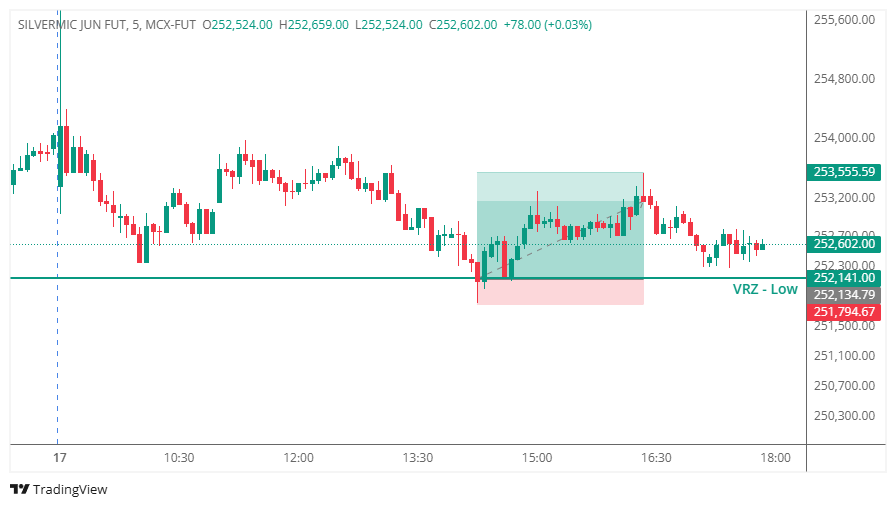
SILVERMIC JUN FUT approached the previously identified VRZ Low at ₹252,141 and briefly traded below the support zone, creating the appearance of a bearish breakdown.
At first glance, the move suggested that sellers had gained control and lower prices were likely. The breakdown attracted fresh short sellers expecting downside continuation.
However, the market failed to accept prices below the VRZ.
Instead of extending lower, buyers quickly absorbed the selling pressure and pushed the contract back above ₹252,141. Within a few candles, price reclaimed the VRZ Low and started establishing acceptance above the support zone.
This transition confirmed a classic Breakout Failure (BOF).
As the breakdown failed, trapped sellers began covering their positions while fresh buyers entered the market. The combination of short covering and new buying participation generated a steady intraday recovery, ultimately producing a successful BOF reversal.
Many traders assumed:
The market disagreed.
When price reclaimed ₹252,141:
This change from bearish confidence to uncertainty became the fuel for the upside move.
Trading below support is not enough. The market must sustain below that level.
The quick recovery above ₹252,141 revealed aggressive buying interest and rejection of lower prices.
Trapped sellers and fresh buyers frequently create powerful recovery moves.
Predicting the breakdown could have resulted in poor positioning. Waiting for BOF confirmation provided a significantly higher-probability long setup.
Major moves often begin when the market rejects prices beyond important support or resistance levels.

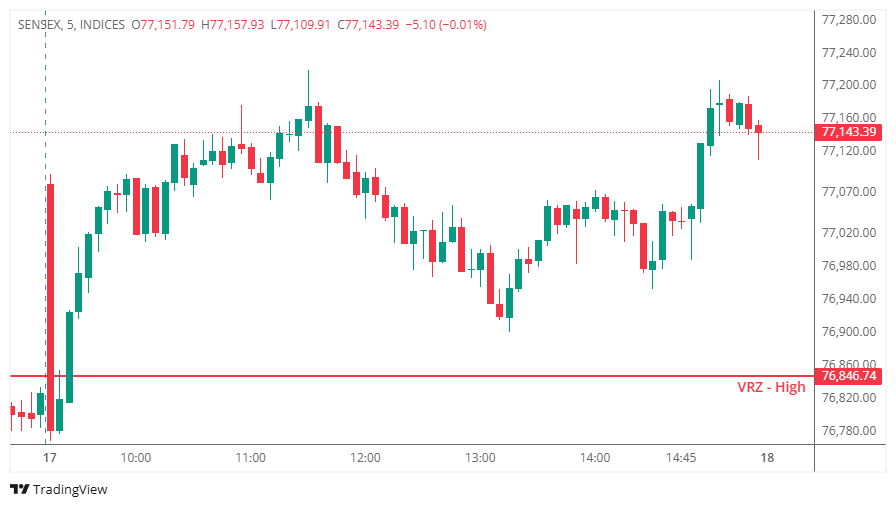
SENSEX opened near the VRZ High at ₹76,846.74 and quickly moved above the resistance zone, creating the appearance of a bullish breakout.
At first glance, the price action suggested that buyers could become trapped and trigger a Breakout Failure (BOF) back below the VRZ.
However, the market showed strong acceptance above ₹76,846.74.
Instead of slipping back below the breakout zone and confirming a BOF, buyers continued to absorb supply and maintained control throughout the session. Price remained comfortably above the VRZ and gradually extended higher.
As a result, the potential BOF was invalidated before confirmation, reminding traders that every breakout above a VRZ does not necessarily create a reversal opportunity.
The early breakout encouraged traders to anticipate a possible BOF reversal.
However, the market had different plans.
This is a reminder that markets do not provide tradable reversals every day. Sometimes, strength simply remains strength.
Price moving above resistance alone is not enough. Rejection and confirmation are equally important.
Once SENSEX sustained above ₹76,846.74, the probability of a bearish BOF declined significantly.
Waiting for confirmation prevents traders from forcing low-quality setups.
Professional traders understand that avoiding unnecessary trades is part of long-term success.

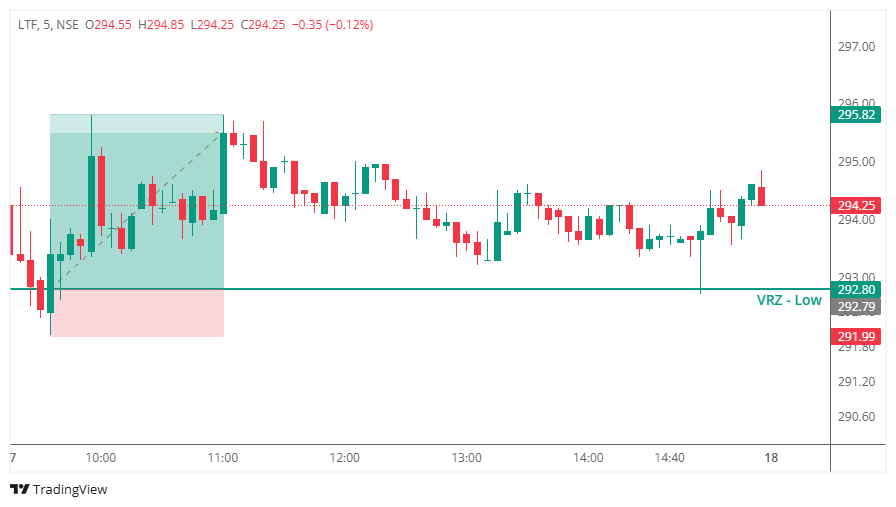
LTF approached the previously identified VRZ Low at ₹292.80 and initially broke below the support zone, creating the impression of a genuine bearish breakdown.
The move attracted aggressive sellers expecting further downside continuation. At first glance, the price action suggested that support had failed and lower levels were likely.
However, the market failed to accept prices below ₹292.80.
Instead of continuing lower, buyers quickly stepped in and absorbed the selling pressure. Within a few candles, price reclaimed the VRZ Low and started trading back above the support zone.
This transition confirmed a classic Breakout Failure (BOF).
Once the breakdown failed, trapped sellers began exiting their positions while fresh buyers entered the market. The combination of short covering and new buying interest fueled a strong intraday recovery.
The most expensive assumption in trading is believing:
"A breakdown below support guarantees lower prices."
As LTF traded below ₹292.80, many traders expected:
The market disagreed.
When price reclaimed ₹292.80:
This shift from confidence to uncertainty created the fuel for the upside move.
The market rewarded traders who waited for confirmation and punished those who reacted to the initial breakdown.
1. A Breakdown Does Not Mean Trend Down
A move below support only creates opportunity. The market still needs to prove acceptance below that level.
2. Reclaiming the VRZ Is Valuable Information
The quick recovery above ₹292.80 revealed that buyers were defending lower prices aggressively.
3. Failed Breakdowns Often Reverse Sharply
Trapped sellers and fresh buyers can produce fast and powerful recoveries.
4. Confirmation Beats Prediction
Predicting the breakdown would have resulted in a poor trade. Waiting for BOF confirmation provided a much higher-probability long setup.

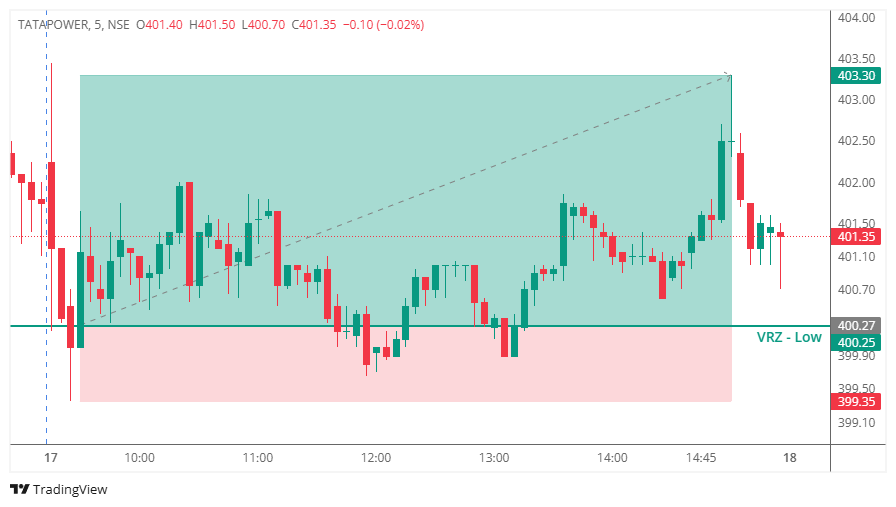
TATAPOWER approached the VRZ Low at ₹400.25 and initially slipped below the support zone, creating the appearance of a bearish breakdown. The move attracted sellers expecting further downside momentum and a continuation of the decline.
However, the breakdown lacked acceptance.
Instead of sustaining below ₹400.25, buyers quickly absorbed the selling pressure and pushed the stock back above the VRZ Low. The inability to hold lower prices confirmed a classic Breakout Failure (BOF) setup.
Once the breakdown failed, trapped sellers began covering their positions while fresh buyers entered the market. This combination generated steady upside momentum and led to a strong intraday recovery.
Many traders assumed:
The market had a different plan.
When price reclaimed ₹400.25:
The shift from pessimism to urgency fueled the upside move.
A breakdown is valid only when the market sustains below support.
The quick recovery above ₹400.25 signaled that sellers lacked conviction.
Failed breakdowns often produce sharp moves due to short covering and fresh buying.
Waiting for BOF confirmation provided a higher-probability long setup than chasing the breakdown.
