
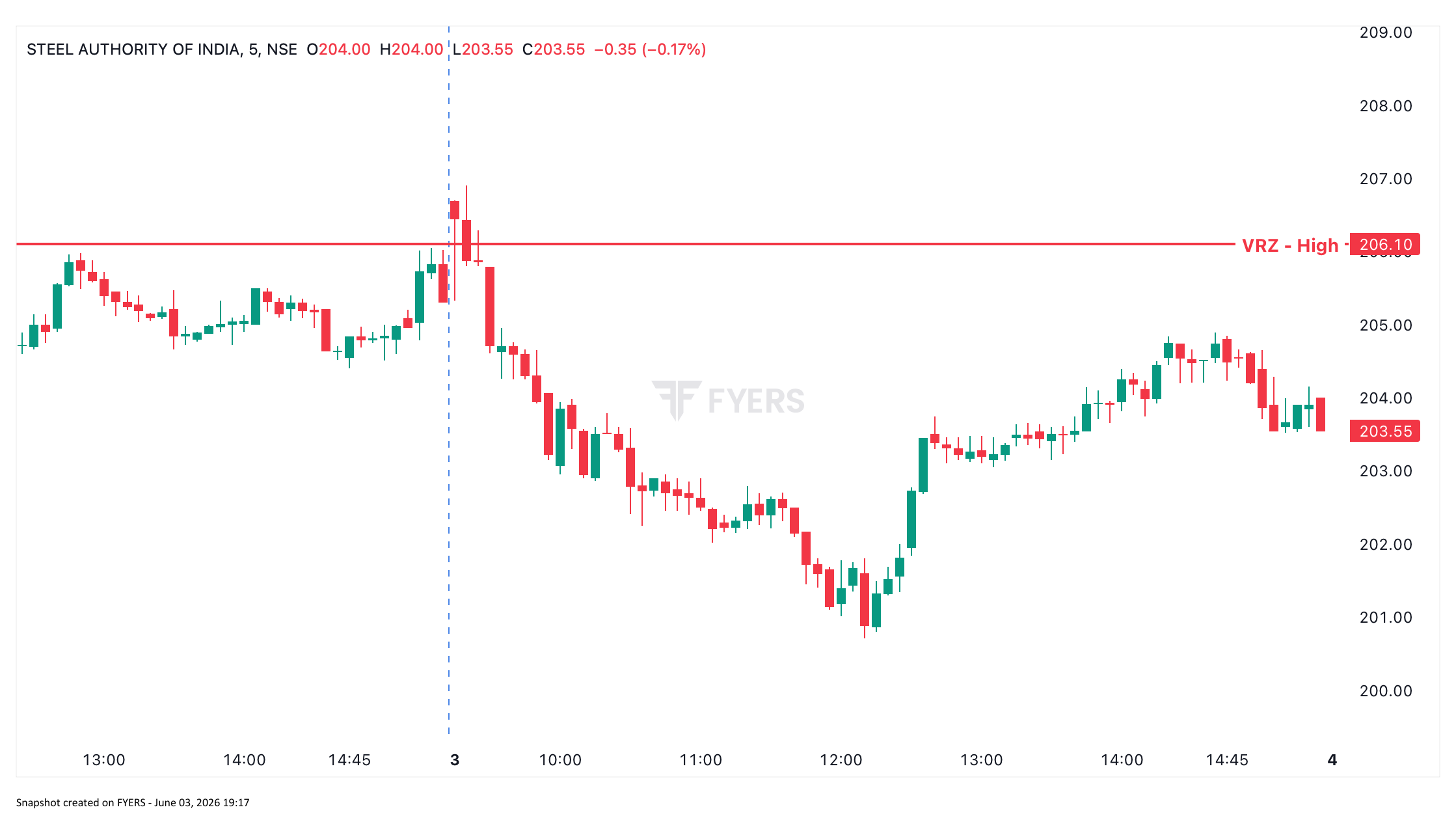
SAIL opened with strong bullish intent and quickly moved above the VRZ High at ₹206.10.
At first glance, the move appeared to be a genuine breakout. Price penetrated the resistance zone and attracted traders looking for a continuation rally.
However, the breakout lacked follow-through.
Instead of building acceptance above ₹206.10, sellers emerged almost immediately. The bullish momentum disappeared within a few candles and price slipped back below the VRZ.
This transition confirmed a classic Breakout Failure (BOF).
Once the market rejected higher prices, selling pressure accelerated and the stock witnessed a sharp intraday decline from the breakout area.
The most expensive emotion in trading is often assumption.
Many traders assumed:
The market disagreed.
The breakout attracted attention, but not acceptance.
When price started trading back below ₹206.10
Started doubting the breakout.
Exited to protect capital.
Got trapped near the highs.
Recognized weakness and became aggressive.
This shift from optimism to regret created the downside move.
The market punished traders who reacted to price movement and rewarded traders who waited for confirmation.
Many traders automatically become bullish after a strong opening.
A gap-up only creates opportunity.
The market still needs to prove strength.
SAIL failed that test.
The VRZ acted as a decision zone.
The rejection near ₹206.10 revealed that sellers were defending higher prices aggressively.
Successful breakouts require new buyers.
Failed breakouts are powered by:
This combination often creates faster moves.
Predicting the breakout would have resulted in a long trade.
Waiting for the BOF confirmation provided a much higher-probability short setup.