
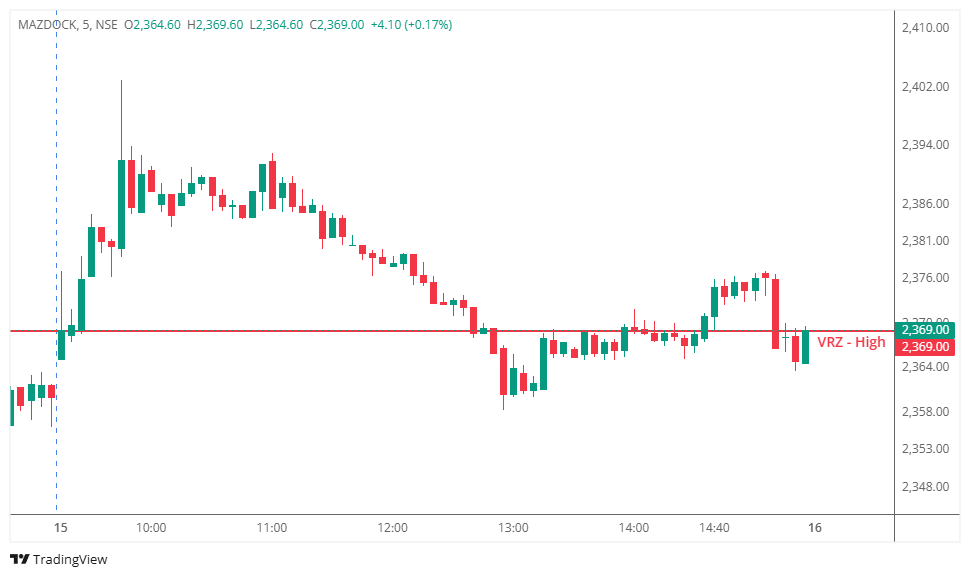

📈 MAZDOCK approached the previously identified VRZ High at ₹2369.00 and briefly moved above the resistance zone, creating the appearance of a bullish breakout.
💡 Initially, the breakout suggested buyers had gained control and that higher prices could follow. This attracted breakout traders expecting a strong bullish continuation.
⚠️ However, the price quickly slipped back below the VRZ High, indicating an early rejection of the breakout. Although this reclaim below resistance hinted at a potential Breakout Failure (BOF), sellers failed to generate the follow-through required to confirm a bearish reversal.
📊 Instead of accelerating lower, the stock continued trading around the VRZ High with limited momentum. The market remained range-bound, with neither buyers nor sellers establishing clear dominance.
❌ As a result, the potential BOF remained invalidated, and no high-probability trade setup emerged.
🔸 🚀 The breakout above resistance was genuine.
🔸 📉 A failed breakout would trigger aggressive selling.
🔸 🐻 Sellers would quickly dominate after the rejection.
After price moved back below ₹2369.00:
🟡 Buyers reduced their aggression.
🟠 Sellers gained only temporary control.
⚪ Strong bearish momentum never developed.
🔄 Price continued consolidating around the VRZ High.
💭 This lack of acceptance below resistance prevented the BOF from evolving into a quality intraday opportunity.
➡️ Moving back below resistance alone does not confirm a valid Breakout Failure.
➡️ Without strong follow-through selling, BOF setups lose their probability advantage.
➡️ Sideways price action near the VRZ indicates a lack of conviction from both buyers and sellers.
➡️ Waiting for complete confirmation helps avoid low-conviction trades and protects trading capital.
💡 This setup reminds traders that a rejection from the VRZ High is only the beginning of a BOF—not the confirmation.
Although MAZDOCK slipped back below the resistance zone, the absence of sustained selling pressure kept the setup incomplete under the Logical Trading System (LTS).
✅ By waiting for proper confirmation instead of anticipating the move, traders avoided a low-probability setup while preserving both capital and discipline.