
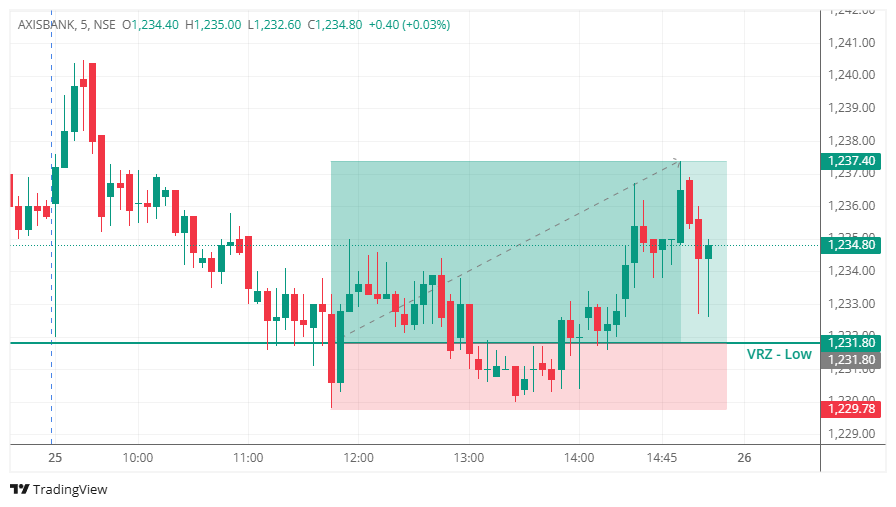

📉 AXISBANK initially broke below the VRZ Low at ₹1,231.80, creating the impression that sellers were gaining control and that the downside breakdown would continue.
🎯 The breakdown attracted fresh sellers, while existing long positions were pressured to exit as price moved below the key support zone.
🔄 However, the breakdown failed to sustain. Price quickly recovered back above the VRZ Low, signaling a classic Bullish Breakout Failure (BOF).
📈 Once price reclaimed the VRZ Low, trapped sellers began covering their short positions while fresh buyers entered the market.
🚀 This shift in market structure generated a strong upside move, delivering approximately 0.45% from the BOF confirmation.
⚖️ Risk-Reward Outcome: 1:2 RR — a clean setup for disciplined traders.
Many traders believed:
❌ The breakdown below ₹1,231.80 was genuine.
❌ Sellers would continue pushing AXISBANK lower.
❌ Support had been decisively broken.
❌ A fresh bearish move was about to begin.
The market responded differently:
✅ Price failed to sustain below the VRZ Low.
✅ Sellers became trapped below the support zone.
✅ Price reclaimed ₹1,231.80 with bullish momentum.
✅ Short covering added fuel to the upside move.
✅ Buyers regained control after the failed breakdown.
🎯 This transition from bearish breakdown → trapped sellers → bullish reversal created the successful BOF opportunity.
A temporary move below the VRZ does not automatically confirm a genuine breakdown.
📍 Failure to Hold the VRZ Signals Weakness
When price quickly returns above the support zone, it indicates that sellers failed to achieve acceptance at lower levels.
⚠️ Failed Breakdowns Can Trigger Sharp Reversals
Trapped sellers are often forced to cover their positions once price reclaims the broken support.
🛡️ Confirmation Improves Trade Quality
Waiting for price to reclaim the VRZ Low provides stronger confirmation than blindly buying the first bounce.
🎯 Trade the Reaction, Not the Prediction
The key opportunity came from the market's failure to sustain below support—not from predicting the reversal in advance.